
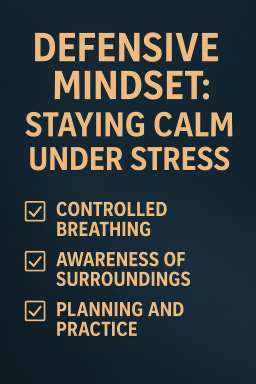
Defensive Mindset: Staying Calm Under Stress
Published on MagiWorld.store · Practical Safety Education Series
In any self-defense situation, your mindset matters more than your strength, tools, or speed. A calm mind allows you to make better decisions, recognize danger earlier, and choose the safest possible response. This guide explains how to build a defensive mindset that helps you stay composed under stress — legally, safely, and effectively.
Overview
- Learn how stress affects your decisions during emergencies.
- Develop simple habits to stay mentally calm and alert.
- Understand how defensive thinking supports lawful self-defense.
- Practice awareness, breathing, and controlled reactions.
1️⃣ Why Staying Calm Matters in Self-Defense
Fear, panic, or adrenaline can freeze your body or cloud your judgment. In emergencies, a calm mind helps you:
- Notice danger earlier — prevention beats reaction.
- Think clearly under pressure and avoid rash actions.
- Follow the law by using only reasonable, proportional force.
- Escape safely instead of escalating conflict.
2️⃣ How Stress Affects Your Body
When you feel threatened, your body activates the fight–flight–freeze response. This can cause:
- Racing heart or short breathing
- Tunnel vision or reduced hearing
- Poor judgment or delayed reaction
- Shaking hands or sudden stiffness
Recognizing these reactions helps you control them — instead of letting them control you.
3️⃣ Techniques to Stay Calm Under Stress
✔ Controlled Breathing (4–4–4 Method)
Inhale for 4 seconds → hold for 4 → exhale for 4. This resets your nervous system and improves decision-making.
✔ Awareness Training
Look ahead, scan your surroundings, and identify exits. Awareness reduces surprises and keeps your brain calm.
✔ Positive Posture & Confidence
Standing tall and walking with purpose reduces your chances of being targeted.
✔ Plan Before You Move
Know your route, avoid isolated areas, and stay in well-lit zones. The more prepared you feel, the calmer you’ll be.
4️⃣ Defensive Mindset During an Emergency
- Stay focused on escape — leaving is always better than fighting.
- Use your voice — shouting “Stop!” or “Back away!” deters threats and signals for help.
- Control your adrenaline — breathe, move, and stay aware.
- Use proportional force only — the law requires reasonable action.
5️⃣ After the Incident: Staying Calm Helps Legally
Remaining calm after a self-defense incident helps you:
- Make accurate statements
- Explain what happened clearly
- Avoid exaggeration or emotional mistakes
- Follow lawful reporting procedures
Your mindset protects not only your safety — but your legal standing as well.
Related Guides
- Choosing the Right Pepper Spray or Personal Alarm
- Reasonable Force Explained: Proportion, Necessity, and Retreat
- Top 10 Self-Defense Tips for Women Walking Alone at Night
Disclaimer: This article is for educational purposes only and does not constitute legal advice. Always verify safety laws applicable to your state.
Leave a Reply
You must be logged in to post a comment.