
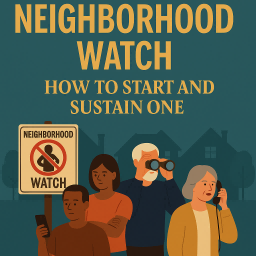
Neighborhood Watch: How to Start and Sustain One
Published on MagiWorld.store · Community Safety & Awareness Series
Overview
A Neighborhood Watch is more than just a group of concerned residents — it’s a proven way to reduce crime, build trust, and strengthen community safety. This guide walks you through how to start and sustain a successful Neighborhood Watch program in your area.
1️⃣ What Is a Neighborhood Watch?
A Neighborhood Watch is a community-led program where neighbors team up with local law enforcement to observe, report, and deter suspicious activities. It promotes safety through vigilance, communication, and cooperation — not confrontation.
2️⃣ Why It Matters
- Crime prevention: Neighborhoods with organized watches report fewer break-ins and thefts.
- Faster communication: Shared alerts help neighbors respond and assist one another.
- Community trust: Regular interaction builds unity and collective responsibility.
- Emergency readiness: Trained members can coordinate faster during crises or natural disasters.
3️⃣ Steps to Start a Neighborhood Watch
- Step 1 – Connect with neighbors: Identify interested households. A good target is 10–20 homes.
- Step 2 – Contact local law enforcement: Many police departments have a community liaison or crime prevention officer.
- Step 3 – Hold your first meeting: Choose a safe place or virtual meeting. Discuss goals, concerns, and structure.
- Step 4 – Assign roles: Coordinator, block captain, communication lead, etc.
- Step 5 – Create communication channels: Group chat, newsletter, or private social media group for alerts.
- Step 6 – Establish simple rules: “Observe and report” only — no patrol confrontations.
- Step 7 – Register your group: Some police departments or national programs (like USAonWatch) provide recognition and support.
4️⃣ Tools and Technology
- ✅ Security cameras: Coordinate shared coverage with privacy guidelines.
- 📱 Neighborhood apps: Tools like Nextdoor or Citizen for real-time alerts.
- 🔔 Personal alarms and lights: Encourage visible deterrents around homes.
- 📧 Email or WhatsApp groups: For alerts, safety tips, and meeting notes.
5️⃣ Keeping It Active and Sustainable
- Regular meetings: Quarterly updates or virtual check-ins keep engagement strong.
- Celebrate success: Recognize members and share positive outcomes.
- Stay visible: Signs, flyers, or safety events remind residents that your Watch is active.
- Partnerships: Work with schools, senior groups, and local businesses for broader reach.
✅ Quick Reference Checklist
| Step | Action | Goal |
|---|---|---|
| 1 | Gather interested neighbors | Build community network |
| 2 | Contact local police liaison | Get guidance and materials |
| 3 | Hold kickoff meeting | Set goals and roles |
| 4 | Create alert system | Share real-time safety info |
| 5 | Review quarterly | Maintain engagement |
FAQ
Do Neighborhood Watches really work?
Yes. Studies show that active community watches can reduce crime by up to 16%, mostly by deterring burglars and improving emergency response coordination.
Can a Neighborhood Watch make arrests?
No. Members are observers only — not law enforcement. Always report suspicious activity to the police, never intervene directly.
How can I get more people involved?
Use positive outreach — flyers, social posts, neighborhood BBQs, or family safety workshops. Make participation easy and welcoming.
Related Guides
- Carrying Pepper Spray: Legal Responsibilities and Limits
- Top 10 Self-Defense Tips for Women Walking Alone at Night
- After a Self-Defense Incident: What to Say (and Not Say)
Disclaimer: This article is for educational purposes only and does not constitute legal advice. Always verify with your local police department before starting a Neighborhood Watch.
Leave a Reply
You must be logged in to post a comment.